Podcast: Play in new window
Guest:
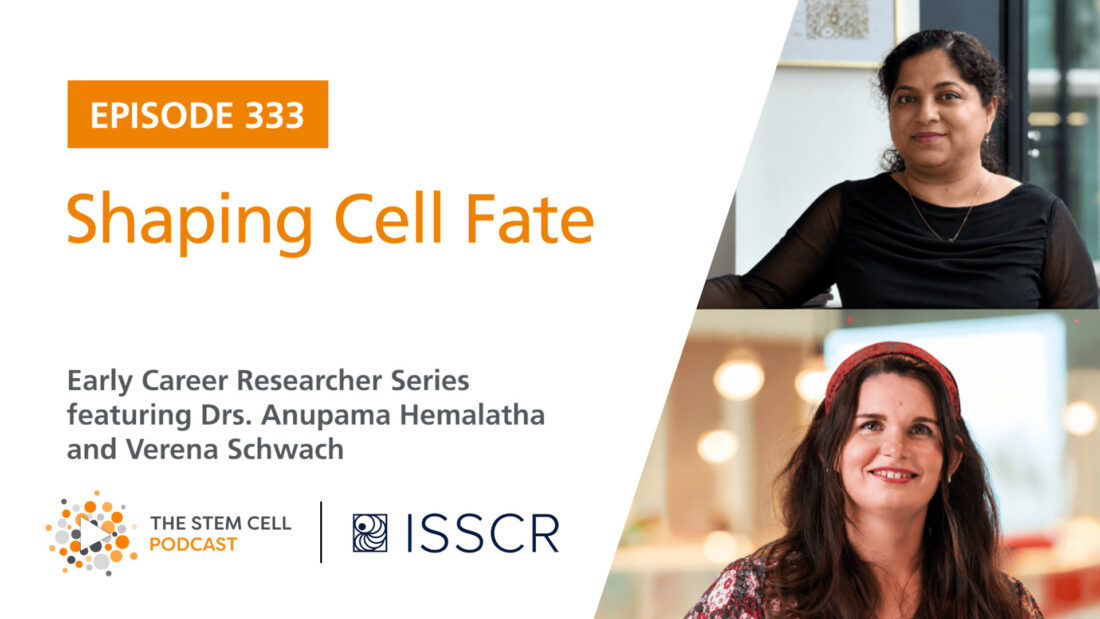
This special episode, created in partnership with the ISSCR Early Career Advisory Committee, features two rising leaders in stem cell research. Dr. Anupama Hemalatha, a Junior Group Leader at the Friedrich Miescher Institute for Biomedical Research, discusses how cellular metabolism shapes stem cell behavior, tissue homeostasis, and responses to cancer-associated mutations. Dr. Verena Schwach, an Assistant Professor at the University of Twente, explores how stem cell-derived tissues and organ-on-chip technologies can model heart–brain interactions and advance disease modeling and drug safety testing.
If you’d like to nominate yourself or a colleague for our Early Career Researcher Series, submit your nomination here.
Featured Products and Resources:
- Get a free wallmart on the derivation and applications of hPSC.
- Stay on top of all the latest publications and news in ESC & iPSC research with STEMCELL Science News.
The Stem Cell Science Round Up
Mapping Early Human Organogenesis – Spatial transcriptomic and metabolomic profiling maps early human organ development, revealing distinct cell populations and molecular programs involved in tissue specification.
Totipotent-Like Cells Recreate Mouse Embryogenesis – Chemically induced totipotent-like stem cells generate self-organizing mouse embryo models that progress through gastrulation and early organogenesis, including the development of functional cardiac tissue.
Improving Organoid Models – A synthetic biology approach selectively eliminates abnormal cells from stem cell-derived multicellular models, improving liver organoid maturity and embryo model development.
Photo Reference: Courtesy of Drs. Anupama Hemalatha and Verena Schwach